

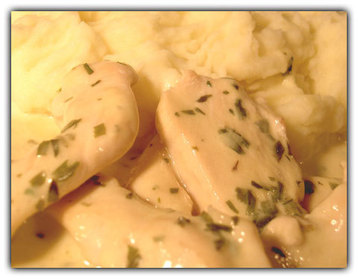
Veal Scallops with Wild Mushrooms, Mustard, and Tarragon Sauce

Ingredients
- 500 grams veal scallops. about 1/8 inch thick
- 4 tablespoons Butter
- ¼ cup chopped shallots
- 1 clove garlic. minced
- 180 grams mixed wild mushrooms (such as Porcini. Morels. Oyster. and shiitake). sliced. or quartered
- 2 tablespoons tarragon
- ½ cup dry white wine
- 1 cup double cream
- 2 tablespoons Dijon mustard
Accompaniment
SponsoredOrigin Pinot Grigio Organic
The nation's favourite tipple in an organic bundle. A great value wine, from Italy's ever popular Pinot Grigio grape. This wine is perfectly balanced with juicy pear and peach notes and soft floral aromas
Description
This is a tasty dish we adapted from a recipe that appeared in Bon Appetit magazine sometime in the 90’s and was served at a dinner party at Norwood West when Lord Hanson was away hence the shallots
Method
-
1
Sprinkle the veal on both sides with salt and pepper, melt 1-tablespoon of butter in large frying pan over a medium to high heat.
Cook the veal until golden, about 20 seconds per side, transfer to plate.
Melt 3 tablespoons of butter in the same frying pan, add the shallots and garlic then sauté for 30 seconds. Add the mushrooms and sauté until brown, about 3 minutes.
Stir in the tarragon add the wine and cook over a high heat until almost all liquid evaporates, stirring to scrape up the browned bits, about 2 minutes.
Add the cream and boil until reduced by a quarter, about 1 minute.
Stir in the mustard return the veal to the pan and simmer until heated through.
Serve and Enjoy!
Chef's Tips
Veal is the meat of young cattle (calves). While veal can be produced from a calf of both sex and any breed, generally veal comes from male calves of dairy cattle breeds. Next to beef, veal has a subtle taste and tender texture.
There are five types of veal:
1. Rosé veal United Kingdom, is from calves reared on farms in association with the UK RSPCA's Freedom Food programme. Its name comes from its pink colour, which is a result of the calves being slaughtered at around 35 weeks Rosé Veal is the only veal we use unless we can get the red or grain fed veal.
2. Formula-fed (or "milk-fed"), veal, from calves that are raised on a nutritionally complete milk formula supplement. The meat colour is ivory or creamy pink, with a firm, fine, and velvety appearance. Usually slaughtered when they reach 18-20 weeks of age (450-500 lb).
3. Non-formula-fed ("red" or "grain-fed"), veal, from calves that are raised on grain, hay, or other solid food, in addition to milk. The meat is darker in colour, and some additional marbling and fat may be apparent. Usually marketed as calf, rather than veal, at 22-26 weeks of age (650-700 lb).
4. Free-raised veal, the veal calves are raised in the pasture, have unlimited access to mother's milk and pasture grasses. They are not administered hormones or antibiotics. These conditions replicate those used to raise authentic pasture-raised veal. The meat is a rich pink colour. Calves are slaughtered at about 24 weeks of age.
5. Bob veal, from calves that are slaughtered when only a few days old (70-100lb.) up to 150 lb. (USA only)
Veal has been an important ingredient in Italian and French cuisine since ancient times. The veal is often in the form of cutlets, such as the Italian cotoletta or the famous Austrian dish Wiener schnitzel. Some classic French veal dishes include fried escalopes, fried veal grenadines (small thick fillet steaks), stuffed paupiettes, roast joints, and blanquettes. As veal is lower in fat than many meats, care must be taken in preparation to ensure that it does not become tough. Veal is often coated in preparation for frying or eaten with a sauce.
As well as providing meat, the bones of calves are used to make a stock that forms the base for sauces and soups such as demi-glace. The stomachs are also used to produce rennet, used in the production of cheese. Calf offal is also commonly regarded as the most appreciated of animal offal. Most valued are the liver, sweetbreads, kidney, and spinal marrow. The head, brains, tongue, and feet are also treasured.
A number of veal cuts are readily obtainable in today's marketplace. The most popular ones include loin chops, rib chops, cutlets, veal for stew, ground veal, arm steaks, blade steaks, Osso Bucco (shanks), breast, and roasts such as rib, rump, and shoulder.
While it's true that some veal cuts are more expensive than others are, it's a good idea to look at cost per serving when purchasing veal. Most veal cuts have very little waste. In fact, a pound of boneless veal can yield three to four (3-ounce) cooked servings.
To determine cost per serving, first look at the number of servings per pound. Cuts that contain more bone and/or fat naturally yield fewer servings per pound. (See chart below to determine the number of servings per pound from various cuts.) Determine cost per serving by dividing the price per pound by the number of servings per pound.
Veal goes well with citrusy flavours, so experiment with herbs such as lemon thyme, citrus sauces, and oriental flavours such as ginger and lemongrass.


Comments (0)