
Essential Curry Paste

Ingredients
- 80-90ml Cold Water
- 150ml White Wine Vinegar
- 1 Tsp Star Anise Powder
- 1 Tsp Ground Cloves
- 1 Tsp Ground Cinnamon
- 1 Tsp Tamarind Powder
- 1 Tablespoon Turmeric Powder
- 4 Curry Leaves
- 1 Tablespoon Chilli Powder
- 5 Medium Dried Chillies
- 1 Tablespoon Green Cardamom Seeds
- 2 Tablespoons Fenugreek Seeds
- 2 Tablespoons Fennel Seeds
- 4 Tablespoons Cumin Seeds
- 50g Coriander Seeds
- 250ml Cold Pressed Rapeseed Oil
Accompaniment
SponsoredOrigin Pinot Grigio Organic
The nation's favourite tipple in an organic bundle. A great value wine, from Italy's ever popular Pinot Grigio grape. This wine is perfectly balanced with juicy pear and peach notes and soft floral aromas
Description
Toasted spices to convert your curry base into a real-meal-deal to be proud of!
Method
-
1
Ideally, you don’t want to be making this up each time you want a curry, therefore it’s best to make enough to last a month or so, depending on how often you make this dish. I make enough for about 10 weeks as I am making curries every week.
You will need a coffee/spine mill or grinder.
If you don’t have one you can still substitute the “seeds” for the ground variety, but you miss out on the opportunity to toast the spices and release their oils.
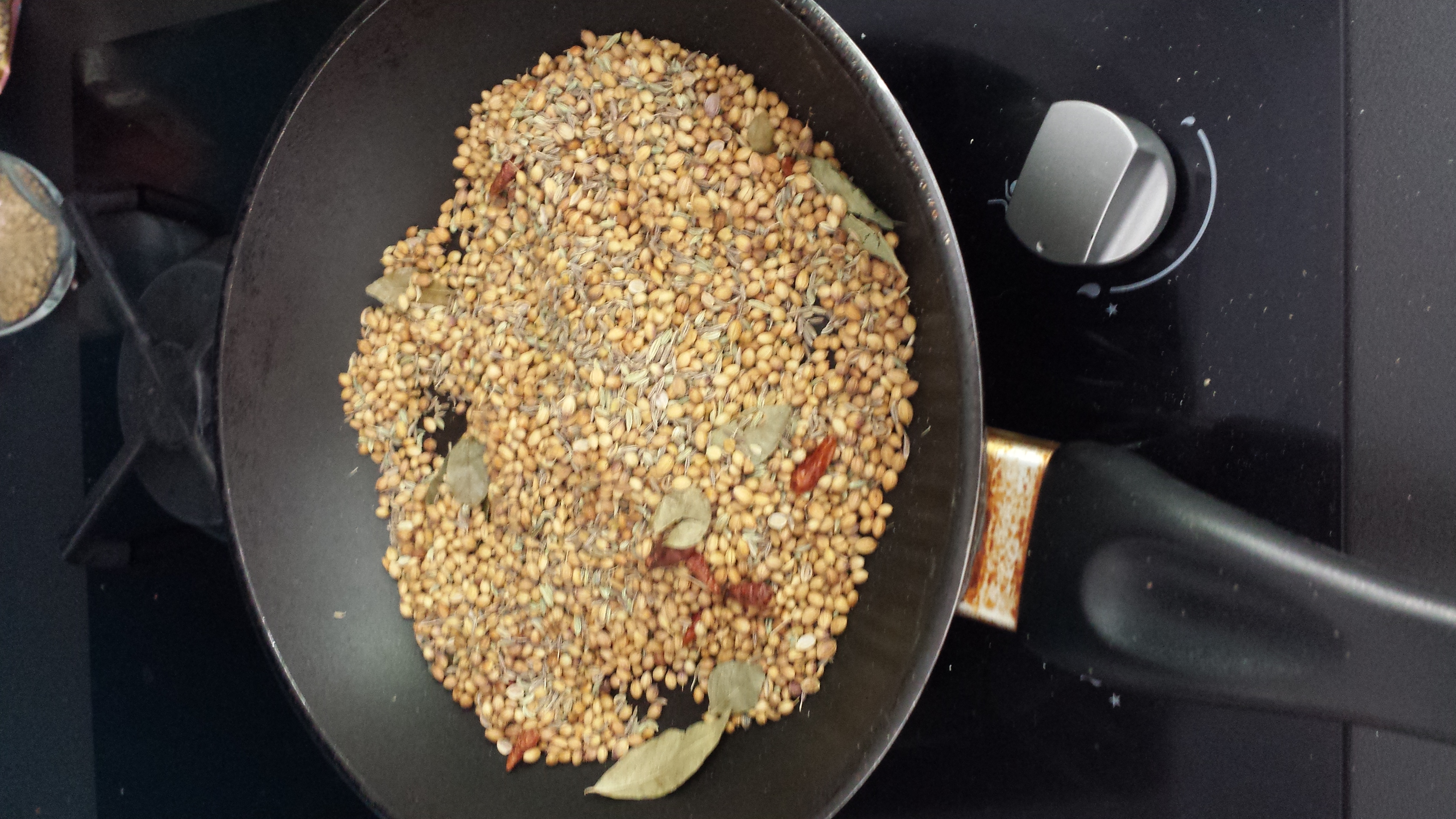
Toast the seeds and curry leaves in a warm pan until the aroma surfaces – around 2 minutes but don’t allow the spices to burn. Be careful in non-stick pans as the seeds may scratch the surface.
Allow them to cool.
Grind the toasted seeds and curry leaves thoroughly.
Put into a bowl and add the ground spices. Mix thoroughly.
Add the white wine vinegar and around 70ml of water. If the mixture doesn’t resemble wet sand, add the remaining water. You want the mixture to stick together but remain firm.
Heat the oil on a medium heat and when a few grains of the spice mixture sizzle on dropping it in, then the oil is warm enough to add the spices. You can use normal vegetable oil if you wish.
Stir this paste for at least 10 minutes, until all of the water is absorbed. Oil should rise to the surface indicating that the paste is cooked.
Don’t be too concerned if you don’t see this. You won’t need to continue cooking beyond about 12-15 minutes.
Avoid burning the spices.
When the mixture is cool, carefully spoon it into airtight jars and keep refrigerated. **See tips**
Chef's Tips
There is a risk of mould forming on top of the spice paste.
To help prevent this, warm a little oil, just enough to cover the paste in each jar. When warm (not smoking hot) pour over the paste and allow to cool before sealing the jars.
The oil should stay on top of the paste preventing any mould from forming.
In some countries it may be easier to obtain green aniseed seeds than fennel seeds. I have tried both and there was no discernible difference once the curry was prepared using either paste.
I hope you enjoy the recipe.
Similar Recipes
View all similar


Comments (0)