

Classic Belgian Moules Mariniere

Ingredients
Accompaniment
SponsoredLouis Jadot Macon Blanc - Featured BBC 2 What to eat now
Minerally, unoaked with lemon and apple fruit character, delicate and well balanced. Founded in 1859 this label has become the reliable stamp of quality and consistency. The Maconnais is located in the Southern part of Burgundy, close to the famous Cote d'Or a region ideal for growing Chardonnay. Buy this wine if you like: Chardonnay with mineral freshness and delicate friut.
Description
Five elements used for this Belgian classic, juicy mussels served with hot salty chips, mayo for dipping and a cold beer what more could you want.
Method
-
1
Scrub the mussel shells thoroughly to remove any sand and barnacles, discard any open or broken mussels, and remove the beards by pulling out the hair like beards from the shell, rinse well in cold water.
Melt half the butter in a large pan, stir in the shallots and cook for about 5 minutes until soft. Add the parsley and wine and bring to a boil add the mussels return to the boil cover with a lid and cook for 5 minutes or so shaking regularly until the mussels open.
Remove the mussels from the cooking liquor using a slotted spoon transfer to a bowl discarding any mussels that have not opened, cover the bowl with a clean damp tea towel.
Return the cooking liquor to the heat and bring to a boil simmer for about 1 to 2 minutes then whisk in the remaining butter, spoon the mussels into bowls pour over the juices garnish with chopped parsley
Serve and Enjoy with golden crispy chips and garlic mayonnaise!
Chef's Tips
Mussels with fries or Moules frites are a characteristic Belgian dish. You get a big bowl (just about always a large pot) of steamed mussels, broth, and a side of frites.
There are many ways to serve the mussels, but the most classic is Moules Mariniere the mussels are offered in a sauce of white wine, shallots, parsley, and butter. You can in addition find mussels served with sauces made with beer, or cream, or vegetable stock.
For the greatest authenticity, use a shell to crack open the mussels, not your fork.
Mussels are at their best in cold weather, so their season is usually from October to March. When you see them in a fishmonger’s, a sign of freshness is that most of them are tightly closed: if there are a lot of open mussels don’t bother. When buying mussels you need to allow at least 1 pint (570 ml) per person for a first course, and 1½-2 pints (about 1 litre) for a main course. That may seem a lot, but some will have to be discarded and, once they have been shelled, mussels are very small and light.
The ritual of cleaning and preparing them sounds more bother than it actually is. When you get them home, plonk the mussels straightaway into a sinkful of cold water.
First of all throw out any that float to the top, then leave the cold tap running over them while you take a small knife and scrape off all the barnacles and pull off the little hairy beards.
Discard any mussels that are broken, and any that are open and refuse to close tight when given a sharp tap with a knife.
After you’ve cleaned each one, place it straight in another bowl of clean water. When they’re all in, swirl them around in three or four more changes of cold water to get rid of any lingering bits of grit or sand.
Leave the cleaned mussels in cold water until you’re ready to cook them. As an extra safety precaution, always check mussels again after cooking this time discarding any whose shells haven’t opened.
Similar Recipes
View all similar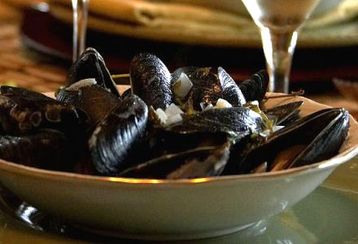


Comments (0)